Loc maintenance in San Diego supports mature locs through root separation, grooming, scalp-focused care, buildup discussions, and scheduled upkeep designed around the current condition of an established loc set.

Established locs can develop maintenance concerns gradually rather than all at once. Roots may begin joining neighboring sections, residue can become harder to ignore, scalp access may change, and individual locs can start looking less uniform than they did after the previous visit. Routine care is therefore less about creating a new hairstyle and more about preserving order within a structure that is already mature.
For loc maintenance San Diego clients, the useful questions often concern what has changed since the last service. Root separation, scalp condition, visible buildup, grooming, and weak areas can each require different attention. A loc grooming services visit may focus on presentation, while another appointment may be more about separating roots or evaluating residue concerns. Awa Hair Braiding provides ongoing loc maintenance within its broader textured-hair service menu, with 24/7 availability that gives clients more flexibility to schedule recurring care around their own routines.
Mature locs benefit from regular observation because root growth, residue, scalp access, and individual loc condition can change between visits even when the overall set looks stable.
New growth can begin joining neighboring locs if sections are not monitored, making root separation an important part of preserving the existing loc map.
Visible product residue or lint can affect how clean and defined mature locs appear, so buildup concerns should be identified instead of hidden beneath styling.
Healthy scalp maintenance for locs starts with being able to reach the scalp between sections, especially as mature locs become longer or denser over time.
Individual locs can develop thin or weakened sections that deserve closer evaluation rather than being treated automatically as routine grooming or simple cosmetic unevenness.
A regular loc care plan can help clients think about maintenance as an ongoing rhythm instead of waiting until several small concerns accumulate together.
As a full-service braiding salon, the team also understands textured-hair sectioning and protective styling, giving loc clients access to related styling conversations when needed.
A maintenance visit can focus on root separation, residue concerns, scalp access, grooming, weak areas, and the condition of mature locs.
From fine, fragile hair to thick, coarse textures, the technique adjusts to what your hair needs.
The visit starts with what has changed, then narrows attention to roots, scalp, residue, grooming, or other priorities within the established loc set.
Identify what looks different since the last visit.
Review roots and separation across mature locs.
Work through agreed maintenance or grooming concerns.
Discuss what should be watched between visits.
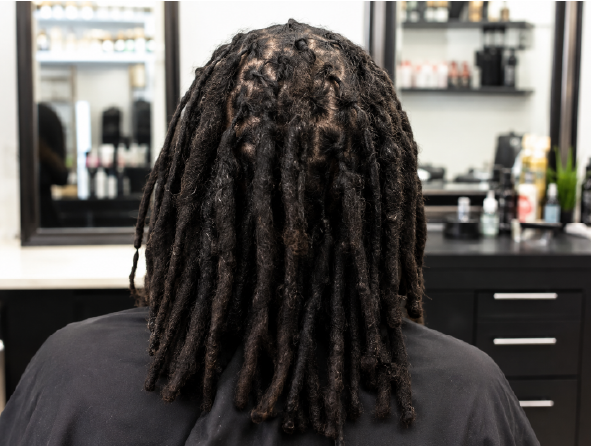
Before — natural hair, pre-appointment
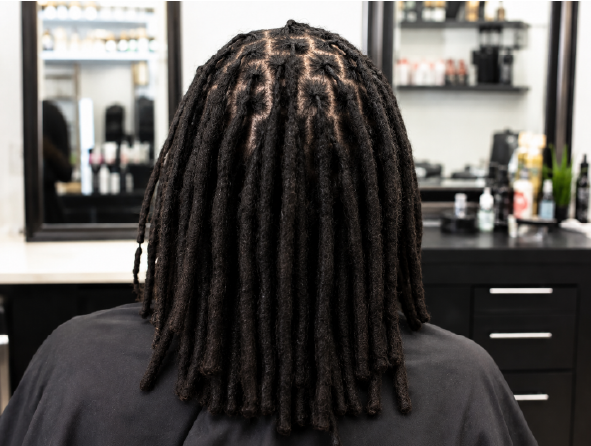
After — finished loc maintenance
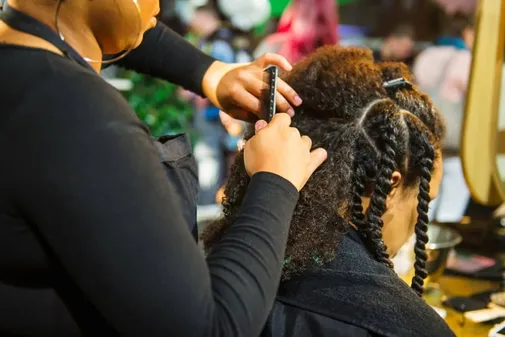
A maintenance appointment does not need to wait until every loc concern appears at once. If roots are joining, residue is becoming visible, or the set needs grooming, those changes can be discussed individually. Clients exploring protective hair styling services in Santee can also review related textured-hair services when needed.
Browse maintained locs to observe root separation, cleaner organization, mature structure, and different grooming outcomes.

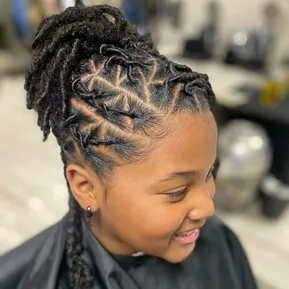
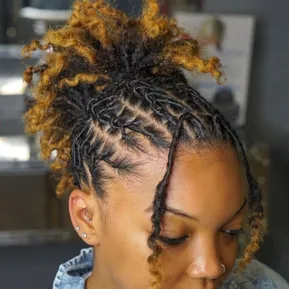
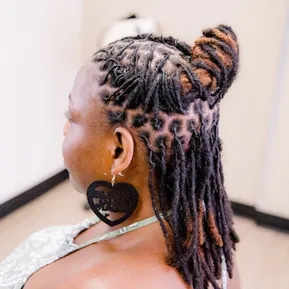
New growth can grow between neighboring loc sections and begin connecting them near the scalp. Root separation helps maintain the existing parting pattern. How often it is needed varies by growth and loc structure, so clients should avoid assuming one schedule fits everyone.
Visible residue may come from products, lint, or other accumulation, but appearance alone cannot identify what is inside a loc. Clients interested in loc root maintenance or buildup concerns should describe what they notice so the salon can clarify which services are actually available.
Weak or thinning sections should be evaluated separately because routine maintenance does not automatically mean repair. The supplied business information confirms loc maintenance but not dedicated repair work. Clients should explain the concern before booking so the salon can clarify what support is available.
Loc wash and conditioning care appears in the supporting keyword set, but the confirmed business brief does not specifically state that it is included with every maintenance service. Clients should ask what preparation or cleansing is part of their appointment before arriving.
A long-term routine should reflect growth, root condition, scalp needs, residue, and how the mature locs are wearing over time. Clients should use professional guidance rather than fixed internet schedules, because maintenance frequency and priorities can differ substantially between individual loc sets.
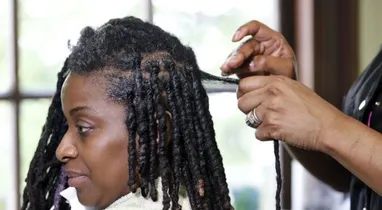
Keep new growth separated within established sections.
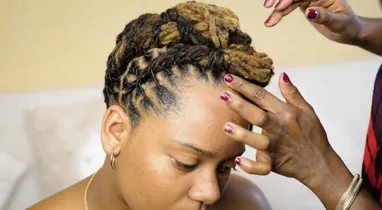
Use loc grooming services for ongoing presentation.
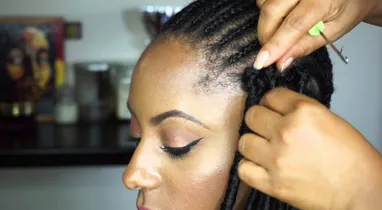
Compare loc care with other protective options.
Bring current root, scalp, residue, and grooming concerns to Awa Hair Braiding for discussion.