Loc services in San Diego help clients begin, maintain, organize, and style locs through stage-aware care, root attention, section consistency, and appointment access available around the clock.

Loc care differs from choosing a temporary braid style because every appointment begins with work that already exists. New growth changes the distance between the scalp and formed locs, parting can become less visible, and mature sections may need different attention from newer ones. Someone preparing to start dreadlocks is making foundation decisions, while an established client is usually protecting continuity and organization.
That makes loc services San Diego less about selecting a look from scratch and more about understanding what should remain consistent from one visit to the next. Maintenance may involve root organization, grooming, scalp access, or styling decisions based on the loc stage. Clients can also ask about natural loc care, dreadlock grooming services, protective loc hairstyles, or a professional loctician consultation when planning their next visit. With 24/7 availability and more than 20 braiders, the salon offers scheduling flexibility while keeping each appointment focused on the locs already in place.
Loc care rewards continuity. The team considers existing sectioning, current growth, grooming priorities, and the next maintenance goal instead of restarting the style.
Established locs carry a visible history. Previous sectioning, growth, and styling choices provide useful context for deciding what deserves attention during the current appointment.
New growth changes how roots look between visits. Reviewing that growth helps distinguish ordinary maintenance needs from concerns that should be discussed more carefully before service.
Parting is part of the loc set's structure. Keeping track of existing sections helps maintenance follow the established organization instead of creating a completely new layout.
Natural loc care isn't a single, identical routine. The current stage, visible roots, scalp access, and styling goal can change what matters during each appointment.
Existing loc structure influences styling possibilities. The experienced braid stylists can discuss protective loc hairstyles without treating mature locs as though they were newly installed temporary styles.
Clients can arrange loc care around varied schedules because the salon operates 24/7, making recurring visits easier to coordinate around work, family, or military responsibilities.
A visit with Awa Hair Braiding can focus on current growth, existing sections, grooming, scalp access, styling, and future maintenance needs.
From fine, fragile hair to thick, coarse textures, the technique adjusts to what your hair needs.
Rather than rebuilding the style, each appointment picks up from the current loc condition and focuses attention where growth, organization, or grooming has changed.
Review new growth against the existing sections.
Identify how the established parting remains organized.
Work on agreed grooming or maintenance priorities.
Leave the loc structure ready for continuity.
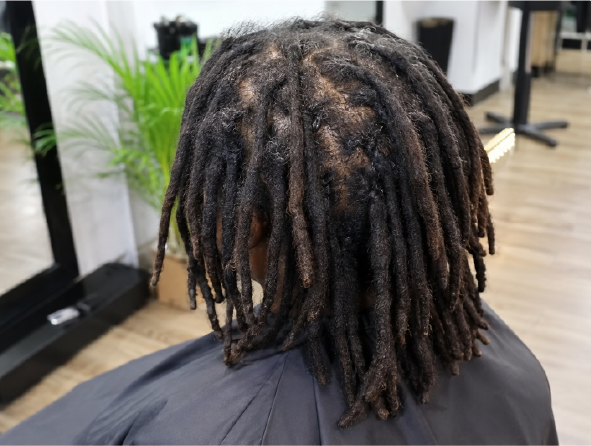
Before — natural hair, pre-appointment

After — finished loc services

Loc maintenance works best when each visit builds on what is already there. Tell Awa Hair Braiding what has changed since your previous service, whether that involves new growth, less-visible parting, grooming concerns, or a different styling goal, so the next appointment begins with useful context.
Clients exploring braid appointments in City Heights can view loc examples showing different stages, root organization, grooming, and styling.



New growth appears between the scalp and established locs as hair grows. Maintenance usually works with that existing structure rather than beginning again. The appropriate timing varies by individual growth, loc stage, and styling preferences, so clients should discuss scheduling with the salon.
Starter locs begin a long-term loc process, while mature loc maintenance works with sections that have already developed. Someone beginning starter locs should think about parting and section size first, whereas established clients usually focus on roots, grooming, or styling.
A two-strand loc retwist generally combines root maintenance with locs arranged into a two-strand style, but that exact service is not confirmed in the supplied business information. Clients should ask whether it is offered and whether their current loc condition suits that approach.
Parting helps determine where individual locs originate and how the set is organized across the scalp. As new growth appears, those lines may become less obvious. Maintenance can revisit the existing organization without assuming the original section pattern should be completely redesigned.
Visible thinning, weak sections, unraveling, or unusual changes deserve a direct assessment rather than an automatic maintenance assumption. The confirmed service list includes starter locs and loc maintenance, but not dedicated repair. Clients should describe the issue before booking so availability can be clarified.
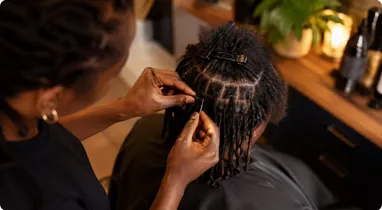
Begin organized sections for a new loc journey.
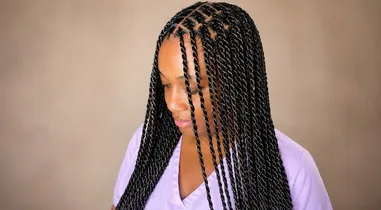
Change presentation while keeping established loc structure.
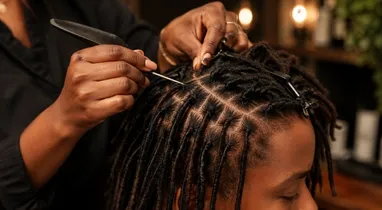
Maintain roots, sections, and visible organization carefully.
Bring your current loc stage, growth concerns, and maintenance priorities to the next appointment.