Men’s braids in San Diego can turn available hair length into scalp-focused patterns, individual braids, twists, or protective looks shaped around the client’s preferred finish and everyday style.
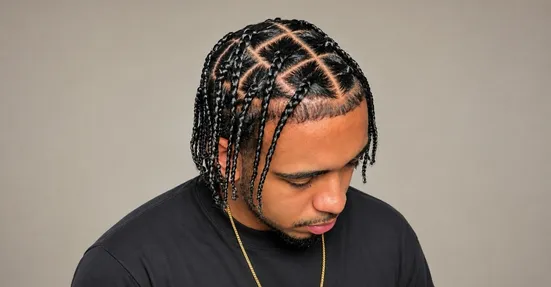
Two men can bring the same reference photo yet need very different approaches because their hair length, density, and desired finish are not identical. Shorter hair may favor close-to-scalp designs when enough length is available to braid securely, while longer hair can open the door to hanging braids, men’s box braids, or men’s two-strand twists. The useful first question is therefore not simply which pattern looks good, but which braid format works with the hair currently available.
That distinction gives men’s braids San Diego a practical starting point. A men’s braid length consultation can consider how much hair can be incorporated, whether the client wants visible scalp patterning or freer movement, and how much design detail belongs in the finished look. Custom masculine braid patterns can range from straightforward rows to more intricate layouts. Clients can also discuss men’s protective hairstyles, parting preferences, and upkeep without assuming every reference style works identically on every head.
Hair length, scalp visibility, movement, parting, and design complexity can all change which braid format makes the most sense for a particular client.
Braids for short men's hair depend on having enough workable length for the chosen technique, so the current hair should be considered before promising a specific reference style.
Some men prefer designs where parting becomes a visible feature, while others want more hair coverage. That preference can immediately narrow the most suitable braid direction.
Individual braids and two-strand twists create movement away from the scalp, giving longer hair a noticeably different silhouette from close-to-scalp patterns and row-based designs.
A clean men's parting design does not need excessive complexity. Straight rows, controlled curves, or selective details can create definition without making the finished style visually crowded.
Clients looking for a professional men's cornrow stylist can discuss row direction, available hair length, and how much scalp pattern they want visible before braiding begins.
As a full-service braiding salon, Awa Hair Braiding offers multiple braid formats for men rather than limiting appointments to one standard pattern or finished appearance.
The appointment can address usable length, braid format, parting visibility, design direction, section size, and preferred finished movement.
From fine, fragile hair to thick, coarse textures, the technique adjusts to what your hair needs.
The service moves from understanding usable hair to selecting a braid format, organizing the layout, and creating the agreed finished design.
See which braid formats the hair supports.
Choose scalp braids, individuals, or twists accordingly.
Set parting and direction for the design.
Complete the selected pattern with clean definition.
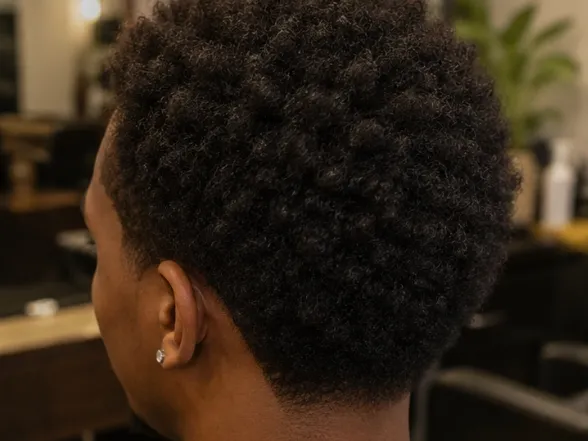
Before — natural hair, pre-appointment
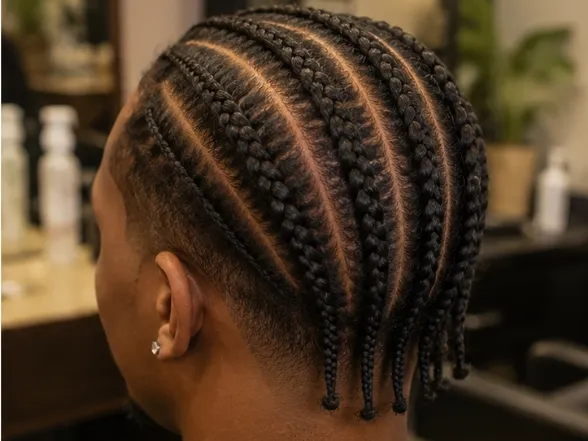
After — finished men’s braids

Some clients want the design itself to command attention, while others prefer braids that hang and move beyond the scalp. Comparing those two directions can make style selection much easier. Cornrow braids emphasize visible layout, while individual braids or twists create a different overall silhouette.
See scalp-focused patterns, individual braids, twists, and varied parting ideas before choosing your next look.
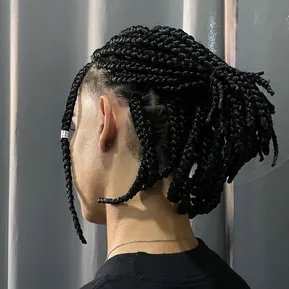

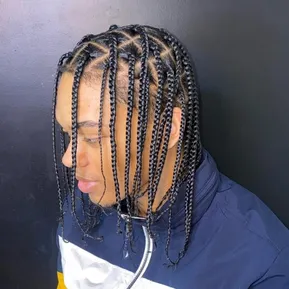

The required length depends on the braid method, hair texture, density, and how securely the stylist can work with the available hair. Short hair may support some styles but not others, so an exact minimum should be confirmed before the appointment.
Shorter hair may work with certain scalp braid designs when enough length is available for secure braiding. More complex individual styles can require a different workable length. Clients should share their current hair length or reference style before assuming a specific design is possible.
No. Two-strand twists wrap two sections around each other, while braids generally interlace three or more sections depending on the technique. Men’s two-strand twists therefore create a different texture and movement from box braids, cornrows, or other braided formats.
Yes, cornrow layouts can vary through direction, spacing, curves, straight rows, and parting choices. The complexity that works best depends on available hair and the desired finish. Clients can discuss custom men’s cornrow patterns before the stylist begins sectioning the hair.
Upkeep depends on braid type, scalp exposure, hair texture, and daily activity. Clients should follow guidance for their specific style, avoid unnecessary pulling or manipulation, and ask when the braid pattern should be refreshed rather than relying on one fixed wear schedule.

Try directional rows with visible parting detail.
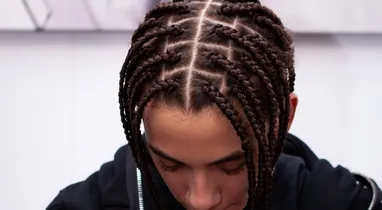
Choose individual sections with freer hanging movement.

Find an African hair braiding salon in National City.
Share your current length and preferred finish so Awa Hair Braiding can discuss suitable options.